











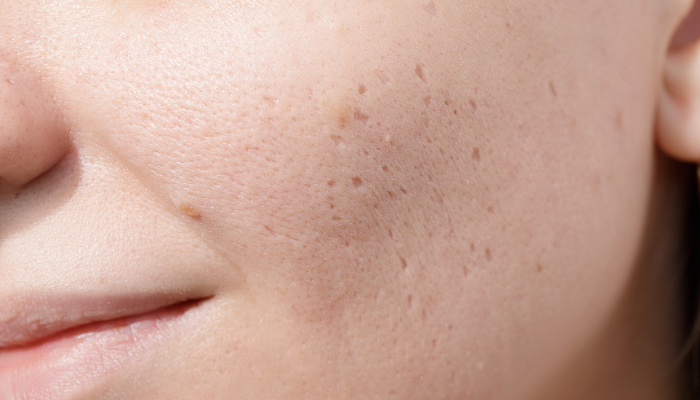
Acne scars can occur as a complication of acne. They can develop when the skin’s natural healing process is disrupted by severe acne breakouts.
Inflammatory acne, particularly deep cysts and nodules, can cause lasting damage to the skin, leading to different types of acne scarring.
Furthermore, some people are more prone to acne scars due to genetics, skin type, or how their skin reacts to acne vulgaris.
Whether you’re dealing with mild ice pick scars or more noticeable boxcar scars, the treatment for acne scars described below can help improve skin texture and restore your confidence.
Types of Acne Scarring and Their Characteristics

Rolling Scars, Boxcar Scars, and Ice Pick Scars
Understanding the type of acne scarring you have is crucial to finding an effective treatment. Acne scars are typically classified into three main types:
- Rolling scars: These scars create a wave-like appearance on the skin, making the surface look uneven.
- Boxcar scars: Broad depressions with well-defined edges, often caused by severe inflammatory acne.
- Ice pick scars: Deep, narrow scars that resemble small punctures in the skin.
Each type of scarring requires a different approach, whether surgical treatment or non-surgical options. Consulting with an acne scar treatment expert at our London clinic can help determine the best acne scar management plan for you.
Acne Scar Treatment Options
When it comes to treatment for acne scars, there are many options available, including surgical and minimally invasive approaches. The best treatment for acne scars depends on factors like the severity of scarring, skin type, and individual goals.
Below we’ll discuss both surgical and minimally-invasions options.
Surgical Treatments for Acne Scars

Scar Revision
For deep or persistent scarring, scar revision surgery can be highly effective. Scar revision surgery uses various techniques to remove larger, more noticeable scars and allows the skin to heal with improved texture.
Subcision
Subcision is a surgical technique used to treat rolling scars by releasing tethered scarring, the fibrous bands pulling the skin downward. This allows the skin to heal naturally and creates a smoother surface.
Excision
This treatment for acne scars refers to surgically removing the entire scar with a scalpel, then using sutures to close the wound, allowing it to heal with a smoother texture.
Punch excision
This procedure involves removing individual deep ice pick scars with a small surgical tool and then suturing the skin for a smoother appearance.
Minimally-Invasive and Non-Surgical Treatments

Chemical Peel for Acne Scarring
Chemical peels are a popular non-surgical treatment option for mild to moderate acne scarring. Medical grade skin peels use specially formulated acids, such as TCA and carbolic acid (phenol).
These acids exfoliate the top layers of the skin, promoting new collagen production and improving skin texture. Peels can help with atrophic scars, reducing their appearance over time.
Microneedling and Medical Skin Needling
Microneedling, also known as medical skin needling, involves using fine needles to create micro-injuries in the skin. This process stimulates collagen production, helping to improve the appearance of depressed scars, rolling scars, and boxcar scars.
Keep in mind that you may require many treatments, anywhere from 6-8 sessions of microneedling to see noticeable improvement. It’s best to include microneedling as part of a comprehensive treatment plan.
Soft Tissue Fillers for Temporary Scar Reduction

Soft tissue fillers, such as dermal fillers, can be used to temporarily plump up depressed scars, making them less visible. This is a great option for those looking for immediate improvements while undergoing other treatments like microdermabrasion or subcision.
Combination Treatments for Best Results
Most acne scar treatments produce the best results when combined. A treatment plan may include multiple treatments such as a chemical peel, subcision, and microneedling to achieve the best possible outcome.
Experienced acne specialists will assess your skin type and recommend a personalised approach to treatment for acne scars.
Scar Treatment Process and Healing Times

The scar treatment process varies depending on the procedure chosen. Some treatments, such as dermal fillers, provide immediate results, while others, like microneedling, require multiple sessions.
Healing times also vary, with surgical treatments needing a few weeks and non-invasive options having minimal downtime. Your unique and natural healing process plays a significant role in achieving final results.
Retinoids and Topical Treatments
If your scars are very mild, retinoids, available in both prescription and over-the-counter formulations, can help improve skin texture and reduce the appearance of mild scars over time.
These vitamin A derivatives promote cell turnover and collagen production, making them a useful addition to an acne scar management plan.
Topical creams with active ingredients like retinoids and alpha hydroxy acids can support the healing process.
Frequently Asked Questions About Acne Scar Removal Treatments

1. How long does it take to see results from acne scar treatment?
Results vary depending on the treatment. Chemical peels and microneedling require multiple sessions over several months, while surgical treatments like punch excision can show improvements within weeks. Individual skin healing times, skin type, and adherence to aftercare routines also affect the speed of results.
2. Can acne scar treatments completely remove scars?
While treatments significantly reduce the appearance of scars, complete removal is not always possible. Most of our patients, however, do see a dramatic improvement in skin texture and tone.
Treatments like microneedling and subcision help smooth out scars, while chemical peels improve overall skin brightness and evenness.
3. Is acne scar treatment painful?
Minimally invasive treatments like microneedling or chemical peels cause mild discomfort, while surgical procedures may require local anaesthetic to minimise pain. Your doctor or acne scar specialist will provide aftercare recommendations to manage any discomfort during the healing process.
You may experience temporary redness, sensitivity, or slight peeling, but these side effects usually subside quickly.
4. How do I know which treatment is right for my acne scars?
Booking a consultation with our acne scar treatment specialist is the best way to determine the right treatment plan. We will assess your skin, the severity of your acne scars, and your treatment goals.
Factors like skin type, whether your have sensitive skin, and previous treatments will also influence the recommended approach.
5. What is the cost of acne scar treatment?
The cost varies depending on the treatment chosen, the number of sessions required, and the severity of your scar tissue. Our clinics offers various packages for multiple treatments, which can be more cost-effective than individual sessions.
Final Thoughts on Acne Scar Treatment

Acne scarring can be distressing and affect your self esteem. Fortunately, with modern acne scar treatment options, there are effective ways to improve skin texture and confidence.
Whether through surgical procedures like punch excision and subcision or non-surgical options like chemical peels and microneedling, a tailored approach can help achieve the best results.
