












There’s an alternative to breast implants with silicone or saline that you may not know about. If you’re considering breast enlargement, a popular cosmetic surgery procedure to enhance the shape and size of your breasts, then fat transfer may an option for you.
Fat transfer for breast enlargement offers a natural alternative to implants. Below we’ll explore the fat transfer treatment process, its benefits, the recovery process, plus important considerations for choosing this breast procedure method.
What is Fat Transfer for Breast Enlargement?
Fat transfer, also known as fat grafting or autologous breast fat transfer, involves taking fat from one part of the body and injecting it into the breasts. This method not only enhances breast size and gives you a breast lift, but it also contours the donor site, providing a dual benefit.
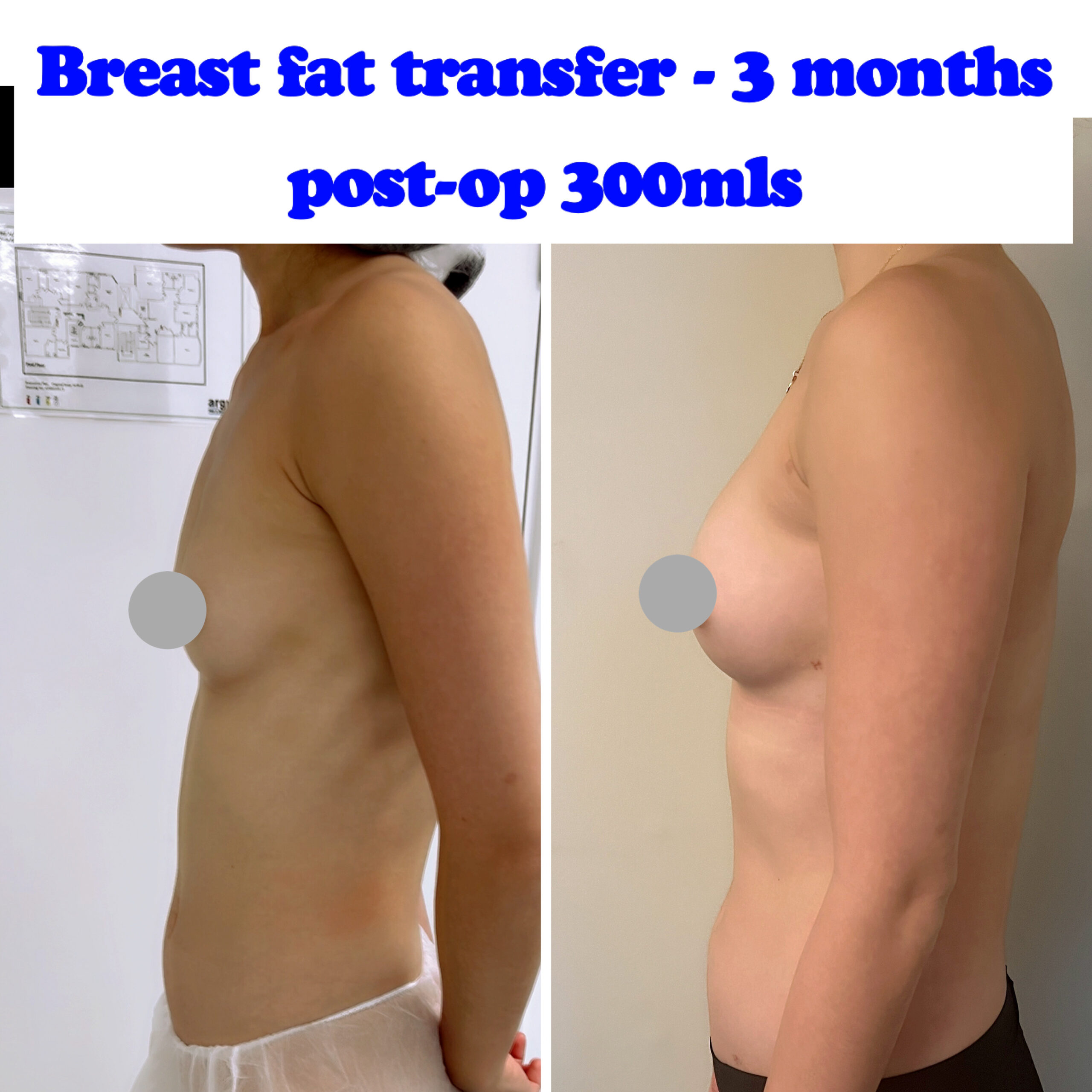
The fat is typically harvested from areas such as the abdomen, thighs, or flanks. Fat transfer breast enlargement is considered a form of natural breast augmentation, as it uses your own fat rather than implants.
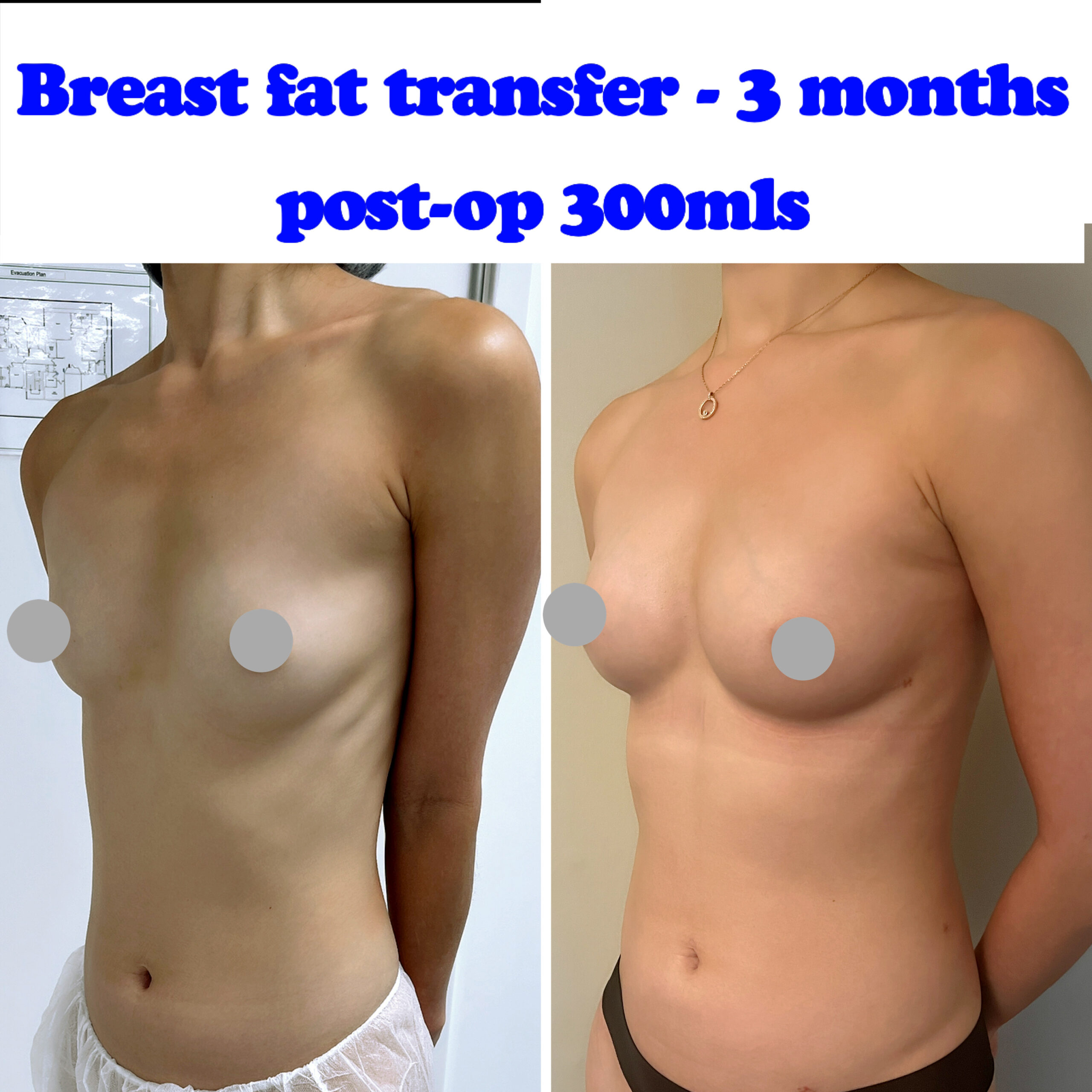
Benefits of Fat Transfer for Breast Enlargement
There are several benefits to choosing fat transfer for breast enlargement:
Natural Results: Because the fat transfer procedure uses your own fat, the results tend to look and feel more natural compared to synthetic implants.
Dual Contouring: In addition to enhancing breast size, fat transfer sculpts the donor site without too much additional surgery time. This improves your overall body contour through liposuction and fat transfer.
No Implants: Breast fat grafting avoids silicone or saline breast implants, eliminating the risks associated with them, such as rupture, leakage, or capsular contracture.
Minimal Scarring: The type of breast augmentation surgery involves only small incisions for liposuction and fat injection, resulting in minimal scarring.
Lower Risk of Allergic Reactions: Since the fat is from your own body, the risk of allergic reactions or rejection is significantly reduced.
Correct Breast Asymmetry: During the procedure, the surgeon will use your own fat to make the breasts more proportional to each other without implants.
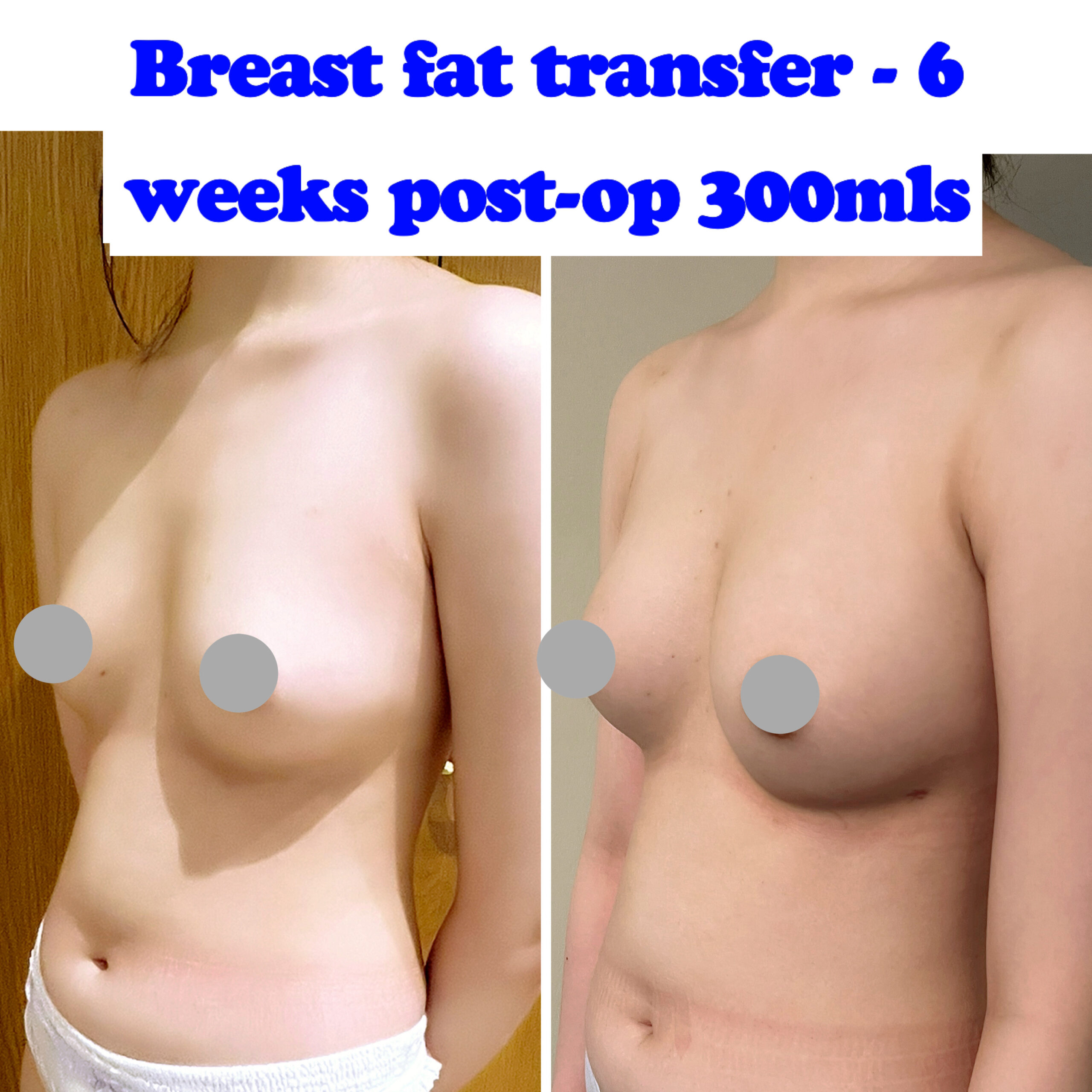
The Fat Transfer Procedure
The fat transfer breast enlargement procedure involves several steps:
Consultation: The process begins with a thorough breast fat transfer consultation with your plastic surgeon to discuss your goals, evaluate your suitability, and plan the procedure.
Harvesting Fat: The first step of the fat transfer surgery is traditional liposuction (or VASER liposuction). The surgeon will make small incisions in the donor area and use a cannula to remove the fat. The fat cells are then purified to remove any excess fluids and dead cells.
Injecting Fat: The purified fat is carefully injected into the breasts in small amounts to ensure even distribution and natural-looking results. The surgeon may use multiple layers and injection sites to achieve the desired shape and size.
Recovery Process
Recovery from a fat transfer procedure typically involves:
Initial Recovery: You may experience swelling, bruising, and discomfort in both the donor and recipient sites. These symptoms usually subside within a few days to a week.
Follow-up Appointments: It’s important to attend follow-up appointments with your plastic surgeon to monitor your progress and address any concerns.
Activity Restrictions: You will need to avoid strenuous activities and heavy lifting for several weeks to allow proper healing after the fat transfer surgery.
Results: Initial results may be visible within a few weeks, but it can take several months for the final outcome to become apparent as the body adjusts to the transferred fat.
Considerations and Risks
While fat transfer breast augmentation is a safe and effective method for breast enlargement, there are some considerations and risks to be aware of:
Volume Retention: Not all the transferred fat will survive; typically, about 50-70% of the fat remains permanently. Your plastic surgeon may overfill the breasts initially to account for this loss.
Multiple Procedures: Depending on your desired size and the amount of available fat, you may require more than one fat transfer procedure to achieve the optimal results.
Side Effects: As with any cosmetic surgery, there are risks such as infection, asymmetry, fat necrosis (death of fat cells), and the formation of lumps or cysts.
Pros and Cons of Fat Transfer for Breast Enlargement

Pros
Natural Look and Feel: The results from fat transfer are often more natural compared to implants.
Dual Benefits: Liposuction during fat transfer also contours the donor area.
Lower Risk of Complications: Since the procedure uses your own fat, the risk of allergic reactions or complications from foreign materials is reduced.
Cons
Volume Limitations: There is a limit to how much the breasts can be enlarged in one session.
Fat Absorption: Some of the transferred fat may be reabsorbed by the body, requiring additional procedures.
Recovery Time: The full recovery process can be longer compared to other breast augmentation methods due to the dual areas treated (donor and recipient sites).
Hybrid Breast Augmentation
Hybrid breast augmentation combines breast uplift or fat transfer with implants to achieve more customised results. This approach allows for the use of implants to provide volume and fat transfer to refine the shape and contour, offering the benefits of both methods.
Is Fat Transfer Right for You?
Fat transfer for breast enlargement is ideal for those seeking a modest increase in breast size and a natural look. It’s also beneficial for individuals who have sufficient donor fat and prefer to avoid implants.
It’s essential to have realistic expectations and understand that the procedure may not achieve the same dramatic results as breast implants.
In summary, fat transfer for breast enlargement offers a natural solution if you’re looking to enhance your breasts while contouring other areas of the body. By understanding the process, benefits, and considerations, you can make an informed decision about whether this innovative procedure is right for you.
