











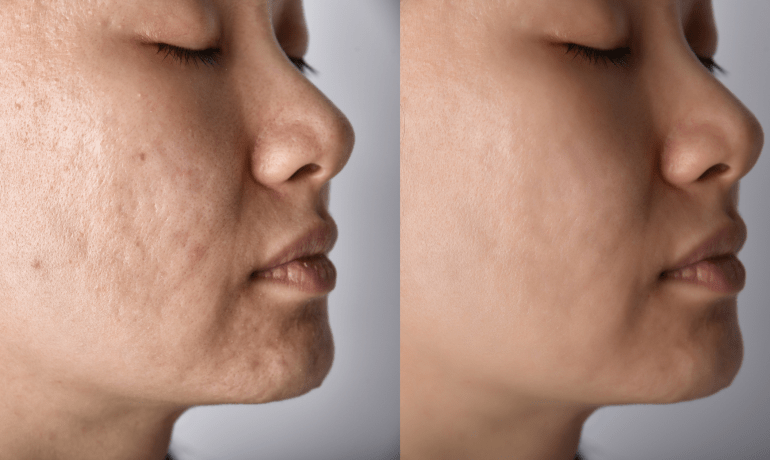
If you’ve been dealing with acne scars, you know how challenging it can be to restore smooth, even skin. Fortunately, there are a variety of acne scar treatments available that can significantly improve the appearance of your skin.
Whether your scarring is minor or more severe, treatments can help reduce the visibility of scars and boost your confidence. Below we’ll discuss the different types of scars and the many treatments that are available.
Types of Acne Scars
Acne scars vary in their appearance, and identifying the type of scarring you have is key to finding the most appropriate treatment. Common types include:
Atrophic Scars
These scars appear as depressions in the skin and are further classified into rolling scars, boxcar scars, and ice pick scars.
Rolling Scars
These scars create a wave-like texture on the skin, giving it an uneven look.
Boxcar Scars:
These are broader and more defined depressions with sharp edges.
Ice Pick Scars:
These scars are narrow and deep, resembling small punctures in the skin. They can be classified as mild ice pick scars or more severe.
Once you know your scar type, you can choose the right acne scar removal treatments to help smooth your skin’s appearance.
Non-Surgical Acne Scar Treatments
Non-surgical treatments are often preferred by individuals looking for less invasive solutions. Fortunately, there are several effective non-surgical options for acne scar treatment.
Microneedling
One of the most popular treatments for acne scarring is microneedling, which involves using tiny needles to create controlled micro-injuries in the skin.
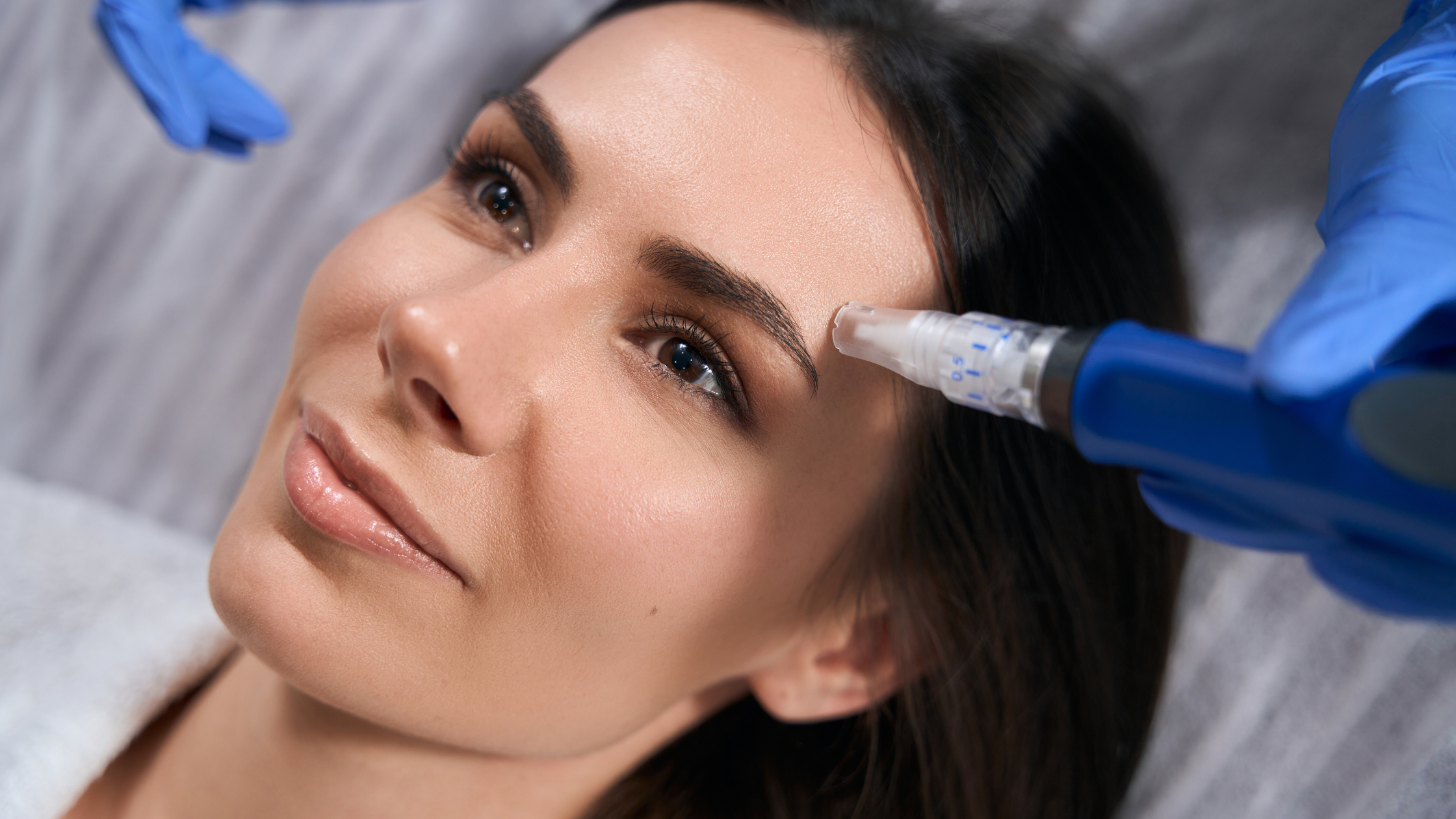
This process stimulates the body’s natural healing response, encouraging collagen production and skin regeneration. Over time, this can smooth out the skin’s surface and reduce the appearance of acne scars.
Microneedling is particularly effective for rolling scars and boxcar scars, as it improves skin texture by breaking up the fibrous tissue beneath the scars. Additionally, it’s suitable for a wide range of skin types and tones, making it a versatile treatment for most people.
While microneedling can yield significant results, multiple sessions are typically required for the best outcome. The treatment is minimally invasive, with little downtime, and patients often experience mild redness and swelling that subsides within a few days.
Soft Tissue Fillers
For those with depressed scars, dermal filler can offer an effective treatment option. These fillers are injected into the scarred areas, lifting the skin to reduce the appearance of indented scars.

While the results from fillers are temporary, typically lasting between six months to a year, they provide immediate improvements.
Chemical Peel
A chemical peel is another non-surgical method used to treat acne scars. This involves applying a chemical solution to the skin, which exfoliates the outer layers, encouraging the growth of new skin.
This treatment can reduce mild scars and improve skin tone and texture, especially for atrophic scars. Chemical peels are most effective for superficial scarring and are often used in combination with other treatments.
Laser Treatment
Whether you’re dealing with atrophic or hypertrophic scars, fractional laser resurfacing has been a popular choice for acne scar removal. Keep in mind that for more moderate or severe acne scars, combined therapy may be required.
Surgical Acne Scar Treatments
For individuals with more severe acne scarring, surgical scar removal treatments may be the most effective route.
Punch Excision and Subcision for Atrophic Acne Scars
Punch excision
This surgical technique is used to treat ice pick scars. In this procedure, the scar tissue is surgically removed, and the skin is stitched back together, allowing smoother skin to form as it heals.
Subcision
This is another option, particularly for rolling scars. In this treatment, the scar tissue underneath the skin is broken apart, allowing the skin to lift and appear smoother.
Scar Revision Surgery
When other treatments do not provide sufficient results, scar revision surgery may be considered. This procedure involves surgically removing the scar tissue and reshaping the skin for a more even appearance. Scar revision is often used in cases of severe scarring or when other treatments have been unsuccessful.

What to Expect and Recovery
If you’re considering acne scar treatment, it’s important to understand the process and recovery expectations. Non-surgical treatments like microneedling and chemical peels typically have minimal downtime, with patients resuming normal activities within a few days.
Surgical procedures, however, may require more extended recovery times. During your consultation and treatment, your plastic surgeon will advise you about the best course of action for you.
After any treatment, it’s important to protect your skin from the sun and follow any aftercare instructions to ensure optimal healing.
In summary, acne scars don’t have to be a permanent reminder of past skin struggles. With a range of effective treatments available, from microneedling to soft tissue fillers, you can restore your skin’s smoothness and confidence. Whether your scars are mild or severe, there is a treatment that can help you achieve a clearer complexion.
